In 2011, NASA’s Atlantis completed its historic final mission, marking the end of an era in human spaceflight. Celebrated worldwide, this last voyage symbolized decades of innovation, resilience, and international collaboration, as Atlantis delivered vital supplies to the International Space Station. But what did this mission truly represent? Beyond its technical achievements, it embodied the relentless spirit of exploration and the courage to embrace change. As Atlantis’s journey concluded, it sparked crucial conversations about the future of space travel—shifting from reusable shuttles to new partnerships with commercial entities and international allies. This farewell was more than a technological milestone; it was a courageous leap toward new horizons, inspiring generations to dream bigger and reach farther. With its legacy rooted in progress and perseverance, Atlantis’s final flight remains a powerful reminder that every ending fuels the promise of new beginnings in our quest to explore the cosmos.

Celebrating the Final Voyage of Atlantis: A Symbol of Space Exploration’s Pinnacle
On July 8, 2011, NASA’s space shuttle program reached a poignant milestone with the launch of Atlantis’s final mission. After nearly 30 years of pioneering human spaceflight, this moment marked the end of an era and the beginning of a new chapter in space exploration. The launch was more than just a routine operation; it was a symbolic farewell to a spacecraft that had become an emblem of innovation, resilience, and international collaboration. Watching Atlantis lift off from Kennedy Space Center, millions around the world felt a mix of pride and nostalgia, knowing they were witnessing the conclusion of a remarkable journey.
Atlantis, officially known as Orbiter Vehicle-104, had established itself as one of NASA’s most dependable and versatile shuttles. Since its first flight in 1985, it completed 33 missions, more than any other shuttle, and played a pivotal role in many of NASA’s landmark achievements. From deploying satellites and repairing the Hubble Space Telescope to contributing significantly to the construction and maintenance of the International Space Station, Atlantis embodied the capabilities and spirit of the space shuttle era. Its ability to carry large payloads and perform complex in-orbit tasks set new standards in human spaceflight and became a cornerstone of NASA’s exploration efforts.
The final mission, designated STS-135, was carefully planned to honor Atlantis’s extensive legacy. Its primary goal was to deliver critical supplies, scientific equipment, and hardware to the International Space Station, ensuring ongoing research and station operations. The cargo included the Multi-Purpose Logistics Module and Raffaello, which transported water, spare parts, and research materials necessary for the station’s continued function. The launch itself was flawless, with clear skies and smooth operation, symbolizing both technical excellence and a sense of closure. As Atlantis soared into space, it carried the hopes and efforts of thousands who had worked tirelessly over decades to push the boundaries of human exploration.
This mission was more than a logistical operation; it was a heartfelt farewell to a spacecraft that had become a symbol of human ingenuity. As astronauts performed spacewalks to upgrade station systems, they demonstrated that Atlantis remained relevant and capable even after nearly three decades of service. The mission highlighted how far space technology had advanced since the shuttle’s debut—reflecting improvements in safety, automation, and cargo handling. These innovations ensured the success of the final flight and laid a foundation for future exploration, emphasizing the shuttle’s lasting contribution to space science and technology.
Beyond the technical achievements, Atlantis’s last journey carried profound symbolic significance. It marked the conclusion of an era characterized by reusable spacecraft designed for low Earth orbit missions, and it signaled a strategic shift for NASA. The retirement of the shuttle prompted the agency to focus on international partnerships and commercial ventures, paving the way for new spacecraft and exploration strategies. Atlantis’s departure not only closed a chapter in NASA’s history but also inspired new ambitions—highlighting that progress often involves embracing change and looking toward future horizons.
As Atlantis disappeared into the sky that day, it left behind a legacy rooted in exploration, teamwork, and human curiosity. Its final flight embodied decades of dedication, technological progress, and international cooperation—reminding us that each ending is a stepping stone toward new discoveries. The mission’s significance extends far beyond the technical accomplishments; it inspired a generation to dream bigger and reach farther. Atlantis’s journey may have concluded, but its spirit of exploration continues to motivate space agencies and explorers worldwide, fueling the ongoing quest to understand our universe.
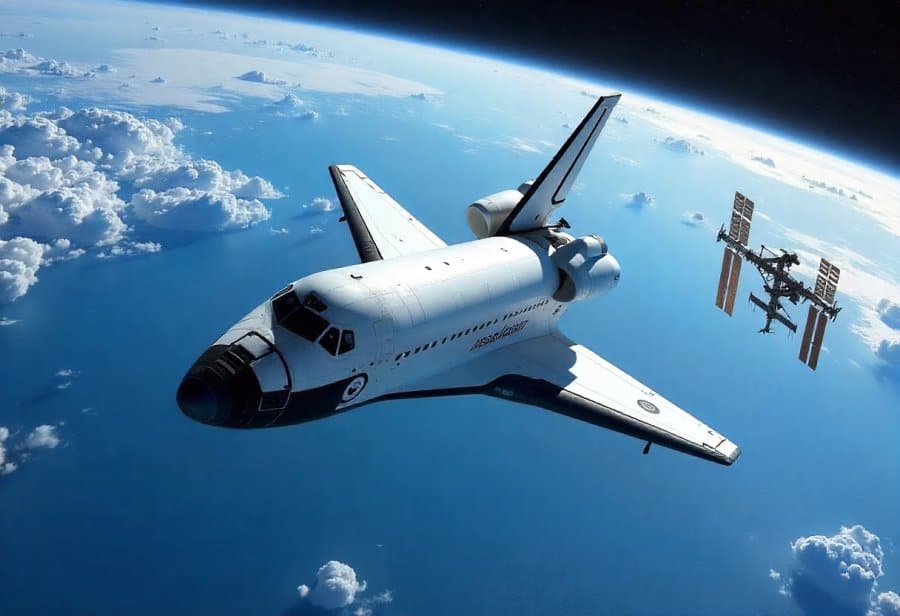
From Reusable Rockets to International Collaboration: The Legacy of the Space Shuttle Program and Atlantis
The Space Shuttle program, launched in the early 1980s, was a bold and ambitious effort by NASA to revolutionize human spaceflight through reusability. Unlike the earlier space vehicles that were used once and discarded, the shuttle was designed to carry astronauts and cargo into orbit multiple times, making space exploration more flexible, cost-effective, and responsive. Over nearly three decades, this program became a symbol of American ingenuity and resilience, supporting a wide range of missions that included deploying satellites, repairing scientific instruments, and constructing the International Space Station. The shuttle’s ability to carry large payloads and perform complex in-orbit tasks set new standards and laid the groundwork for future exploration initiatives.
Atlantis, designated OV-104, stood out as one of NASA’s most versatile and long-serving shuttles. Its first launch in October 1985 marked the beginning of a career that would span over 25 years, during which it completed a record 33 missions—more than any other orbiter. This extensive service record reflected its reputation for reliability and adaptability. Atlantis played a crucial role in deploying scientific satellites, including the Galileo spacecraft on its mission to Jupiter, and was instrumental in repairing and servicing the Hubble Space Telescope, extending its scientific lifespan. Its involvement in the assembly of the International Space Station, beginning with the historic STS-88 mission in 1998, established it as a key contributor to international collaboration in space.
Throughout its operational lifetime, Atlantis underwent numerous upgrades to enhance safety, efficiency, and technological capability. These improvements included reinforced thermal protection systems to better withstand re-entry heat, more precise navigation and docking systems, and streamlined cargo transfer processes. Such advancements were critical in ensuring the shuttle remained effective for increasingly complex missions. These technological evolutions also reflected a culture of continuous improvement, allowing Atlantis to adapt to the evolving demands of space exploration while maintaining its reliability. Each milestone built upon the last, cementing Atlantis’s legacy as a workhorse for NASA’s human spaceflight efforts.
The final mission of Atlantis, designated STS-135 in 2011, showcased some of the most advanced features developed during its service. Upgraded onboard systems, including enhanced avionics and automation, provided safer and more efficient operations. The mission’s cargo, carried in the Multi-Purpose Logistics Module, included vital supplies and scientific equipment needed to sustain the International Space Station. The seamless launch and docking underscored the maturity of shuttle technology, while the crew’s spacewalks demonstrated Atlantis’s continued relevance and capability after nearly three decades. This culmination of technological progress highlighted how the shuttle program had evolved over time to meet new challenges and objectives.
The end of the shuttle era marked a significant shift in NASA’s approach to space exploration. With Atlantis’s retirement, the agency transitioned away from reliance on reusable spacecraft designed primarily for low Earth orbit missions. This strategic move was driven by the high costs and risks associated with shuttle operations, prompting NASA to forge new partnerships with international agencies and commercial spaceflight companies like SpaceX and Boeing. These collaborations aimed to develop more sustainable, cost-effective ways to transport astronauts and cargo, opening fresh avenues for exploration beyond Earth’s orbit. Atlantis’s departure not only closed a chapter in NASA’s history but also inspired new ambitions for space exploration, emphasizing innovation, international cooperation, and the pursuit of deeper space missions.
The legacy of Atlantis’s role in shaping human spaceflight remains profound. Its extensive career set benchmarks for safety, reliability, and technological progress. The shuttle’s ability to carry large payloads, perform complex tasks, and support critical scientific missions helped expand our understanding of space and demonstrated the power of international teamwork. As NASA and the global space community look forward to new exploration horizons, the innovations and lessons from Atlantis continue to influence design, policy, and strategy. Its historic contribution underscores the importance of perseverance and adaptability—qualities that will continue to drive humanity’s quest to explore beyond our home planet.

The End of an Era and the Rise of New Horizons: The Lasting Impact of Atlantis’s Final Flight
The final flight of Atlantis was more than just the end of a spacecraft’s operational life; it became a powerful symbol of human achievement and resilience. After nearly 30 years of pioneering missions, this last voyage embodied the collective efforts of engineers, astronauts, scientists, and international partners who pushed the boundaries of what was possible in space. It was a testament to progress—a culmination of decades of innovation, teamwork, and relentless dedication that had transformed space exploration from a daring dream into a tangible reality.
Throughout its storied career, Atlantis played a pivotal role in shaping NASA’s legacy. Its missions ranged from deploying scientific satellites to repairing the Hubble Space Telescope, and most notably, contributing to the construction and maintenance of the International Space Station. Each milestone expanded our understanding of space and demonstrated the power of international collaboration. The shuttle’s ability to carry large payloads and perform complex tasks set new standards, making it a cornerstone of human spaceflight and a symbol of what teamwork and perseverance can achieve in the harsh environment of space.
The technological advancements showcased during Atlantis’s final mission underscored its lasting influence. Upgraded thermal protection systems improved safety during re-entry, reflecting years of continuous improvement. More precise navigation and docking systems facilitated smoother and safer approaches to the ISS, highlighting progress in spacecraft automation. The deployment of the Multi-Purpose Logistics Module made cargo transfers more efficient, ensuring the station could be resupplied with essentials for scientific research and crew support. These innovations didn’t just serve the last mission—they became part of the shuttle’s enduring legacy, demonstrating a culture of relentless progress that kept Atlantis relevant even after decades in service.
As the shuttle era drew to a close, Atlantis’s departure marked a turning point for NASA’s approach to exploration. The retirement of the shuttle signaled a shift from reliance on reusable spacecraft designed for low Earth orbit missions to a new era rooted in international partnerships and commercial ventures. Companies like SpaceX and Boeing emerged as key players, developing spacecraft that promised to be more cost-effective and adaptable. This transition aimed to sustain human presence in space while opening new pathways for exploring beyond Earth’s orbit, including lunar missions and eventually Mars. Atlantis’s final flight served as a poignant reminder that progress often involves embracing change and rethinking strategies.
Beyond the technological and strategic shifts, Atlantis’s last journey carried profound symbolic weight. It embodied the perseverance required to achieve what once seemed impossible, inspiring generations to dream bigger and reach farther. The shuttle’s legacy is rooted in the collaborations it fostered, the scientific discoveries it enabled, and the technological leaps it inspired. Its departure marked the closing of a chapter but also laid the groundwork for future exploration. It reminded us that setbacks and endings are often preludes to new beginnings, fueling the continuous pursuit of discovery and innovation.
The impact of Atlantis’s final flight extends into the broader narrative of space exploration. It reinforced the importance of international cooperation and the value of shared goals in overcoming complex challenges. The lessons learned from its decades of service—its successes and setbacks alike—inform ongoing efforts to develop sustainable, innovative strategies for reaching deeper into space. The legacy of Atlantis fuels current and future missions, inspiring new generations of explorers and engineers to push beyond perceived limits. Its story is a reminder that human ingenuity and collaboration are essential drivers of progress in the vast expanse of space.
Looking ahead, the spirit of Atlantis continues to influence NASA and the global space community. Its legacy informs the design of new spacecraft, the development of exploration policies, and the cultivation of international partnerships. The shuttle’s story exemplifies resilience and adaptability—qualities that remain vital as humanity ventures further into the cosmos. The lessons learned from its missions serve as a blueprint for overcoming obstacles and seizing opportunities in the pursuit of knowledge and discovery. Atlantis’s final flight is not just a conclusion but a catalyst for new ambitions and horizons.
In the end, Atlantis’s last journey stands as a testament to human curiosity, perseverance, and the unyielding desire to explore our universe. It reminds us that every ending is also a beginning—a stepping stone toward the next frontier. Its legacy is woven into the fabric of space exploration, inspiring current and future explorers to dream bigger, reach farther, and continue the quest to understand our place among the stars. As NASA and the global space community look toward the future, the spirit of Atlantis remains a guiding light, fueling our collective ambition to explore beyond the known and into the infinite possibilities that await us.
Reflecting on the broader implications, the impact of the shuttle program’s end on NASA and space exploration marked a significant shift in the agency’s direction. As NASA continues to develop new exploration strategies, the legacy of Atlantis within NASA’s shuttle program history remains a vital foundation for future endeavors. This ongoing influence highlights how the shuttle’s innovations and achievements continue to inspire advancements in human spaceflight and exploration efforts.